
Enterprise application architectures have shifted decisively toward microservices. While this shift enables faster releases and independent scalability, it has also exposed a critical weakness in traditional QA models: integration fragility. As services evolve independently, failures increasingly occur not within services—but at the boundaries between them.
This is where contract testing is emerging as the missing link in enterprise microservice QA. Forward-looking organizations are embedding contract testing into their software testing services strategy to reduce integration risk without slowing delivery. For decision-makers, the question is no longer if contract testing is needed, but how fast it can be operationalized across teams.
Why Traditional Microservice Testing Models Are Failing
The Limits of End-to-End Testing at Scale
Enterprises initially relied on end-to-end (E2E) testing to validate microservice workflows. Over time, this approach led to:
- Slow feedback cycles
- Fragile test environments
- High test maintenance costs
- Frequent false positives
As systems grow, E2E tests become bottlenecks rather than safeguards. Mature qa testing services now recognize that E2E testing alone cannot provide scalable confidence.
Integration Failures Are the Real Production Risk
Most production incidents in microservices environments stem from:
- API contract changes
- Unexpected data formats
- Version mismatches between services
Unit tests pass. Services deploy successfully. But integrations fail silently until runtime. This is the exact gap contract testing addresses.
What Enterprise Leaders Are Actively Searching For
CTOs and QA heads are looking for answers to:
- How do we detect breaking changes earlier?
- How do we reduce dependency on shared environments?
- How do we enable parallel development across teams?
- How do we maintain release velocity without increasing risk?
Contract testing is increasingly viewed as a core capability within modern quality engineering services, not an optional enhancement.
What Is Contract Testing—and Why It Matters
Defining Contract Testing in Enterprise Terms
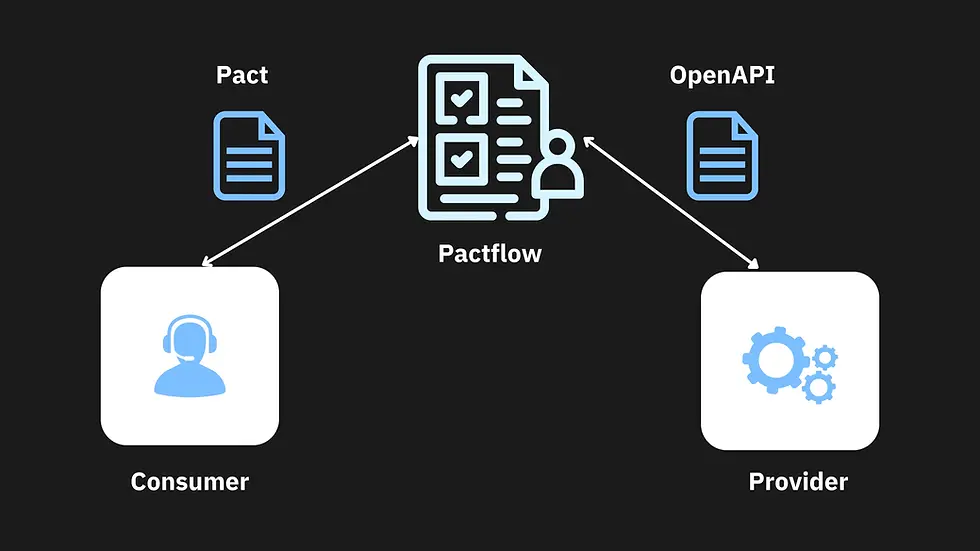
Contract testing validates the expectations between a service consumer and provider. It ensures that:
- Providers meet agreed API behaviors
- Consumers are protected from unexpected changes
- Integration issues are detected before deployment
Unlike E2E tests, contract tests operate at service boundaries—making them faster, more stable, and easier to scale.
Why Contract Testing Fits Microservices Architectures
Contract testing enables:
- Independent service deployments
- Reduced integration dependencies
- Faster feedback in CI/CD pipelines
- Improved ownership across teams
This approach aligns strongly with the principles behind scalable software testing services in distributed systems.
Contract Testing vs End-to-End Testing: A Strategic Comparison
| Aspect | End-to-End Testing | Contract Testing |
| Execution Speed | Slow | Fast |
| Environment Dependency | High | Low |
| Failure Diagnosis | Complex | Precise |
| Scalability | Limited | High |
Leading enterprises do not replace E2E testing entirely—but they reduce its scope by strengthening contract validation.
How Contract Testing Fits Into Modern QA Strategies
Shift-Left Without Increasing Overhead
Contract testing enables true shift-left testing by:
- Catching integration issues during development
- Eliminating late-stage surprises
- Reducing rework during release cycles
Advanced qa testing services integrate contract tests directly into developer workflows, improving accountability and speed.
AI-Driven Test Intelligence
AI-driven QA platforms now:
- Identify high-risk service contracts
- Detect changes likely to break consumers
- Prioritize contract tests based on business impact
This intelligent prioritization is becoming a standard feature of enterprise quality engineering services.
Security Implications of Contract Testing
Why Functional Contracts Are Not Enough
Microservices contracts must also account for:
- Authentication behaviors
- Authorization rules
- Data exposure risks
This is where collaboration with a penetration testing company becomes essential.
Contract Testing + Security Validation
A trusted penetration testing company helps enterprises:
- Validate security assumptions across service contracts
- Identify broken access controls between services
- Simulate real-world API abuse scenarios
When combined, contract testing and penetration testing provide both functional and security assurance at service boundaries.
Data Signals Driving Enterprise Adoption
- Over 65% of enterprises report integration issues as the leading cause of production incidents
- Organizations adopting contract testing reduce integration-related failures by up to 50%
- Teams embedding contract tests in CI/CD pipelines achieve 30–40% faster release cycles
These trends reinforce why contract testing is now foundational to modern software testing services.
Operationalizing Contract Testing at Enterprise Scale
Governance and Ownership Models
Successful enterprises:
- Define clear API ownership
- Enforce versioning standards
- Centralize contract repositories
- Automate contract verification in pipelines
This governance model strengthens quality engineering services without adding bureaucracy.
read more : https://strandshints.net/
Tooling and Ecosystem Alignment
Contract testing integrates seamlessly with:
- API testing frameworks
- CI/CD tools
- Service virtualization platforms
- Observability systems
The result is an end-to-end quality signal that supports continuous delivery.
Choosing the Right QA and Security Partner
Enterprise leaders evaluate partners based on:
- Proven microservices QA expertise
- Strong contract and API testing frameworks
- AI-enabled test optimization
- Integration with DevSecOps practices
- Collaboration with a reliable penetration testing company
The right partner helps organizations scale confidently—without compromising speed or security.
Conclusion: Contract Testing Is No Longer Optional
In microservices-driven enterprises, contract testing is the missing link that closes the gap between speed and stability. By embedding contract testing into software testing services, strengthening delivery through qa testing services, and aligning with mature quality engineering services, organizations gain early risk visibility and production confidence.
When combined with insights from a specialized penetration testing company, contract testing becomes a strategic enabler—not just a QA technique.
FAQs: Contract Testing in Enterprise Microservices
1. Why is contract testing critical for microservices?
It detects integration issues early and enables independent service evolution.
2. How does contract testing reduce reliance on end-to-end tests?
By validating service interactions directly, reducing brittle full-system tests.
3. Can qa testing services implement contract testing in CI/CD pipelines?
Yes, modern pipelines commonly automate contract validation on every build.
4. How does a penetration testing company support contract testing?
By validating security assumptions and identifying API-level vulnerabilities.
5. Is contract testing suitable for large enterprise ecosystems?
Yes, it scales better than traditional integration and E2E testing models.
